Technical Rescue

The importance of proper training

The following has been re-posted by Animal Fire Rescue for educational purposes.

The original post and video can be found at: https://www.firerescue1.com/firefighter-training/videos/reality-training-the-importance-of-proper-training-omh7bP39geX5FdWR/

Reality Training: The importance of proper training

Firefighters become concentrated on doing things quickly rather than correctly when tasks are timed. Chief Wylie breaks down key training points in order to keep firefighters safe.

https://www.firerescue1.com/firefighter-training/videos/reality-training-the-importance-of-proper-training-omh7bP39geX5FdWR/


Technical Rescue

A Set of Fours: The SMC Advance HX Haul System

The following has been re-posted by Animal Fire Rescue for educational purposes.

The original post can be found at: https://rigginglabacademy.com/a-set-of-fours-the-smc-advance-hx-haul-system/

A Set of Fours: The SMC Advance HX Haul System

I have enjoyed the AZTEK for many years.  I have even, at one point in time, used 8 AZTEKs to build and set the truss system on our original RRG office building in Sisters (they toppled over and I had to re-align them and straighten out the building itself). Over the years, there have been improvements and the addition of the Omni Block pulley (moving for the the AZTEK Pro to the AZTEK Elite) was a good move. But still, I still needed an instruction book to deal with prusiks. Admit it…! Most of you have the same dilemma but won’t say anything :).

On a practical level, how many people actually change out their prusiks like they should?  What about inspection, much less changing them out?  How many people actually know which rope the prusiks go on?

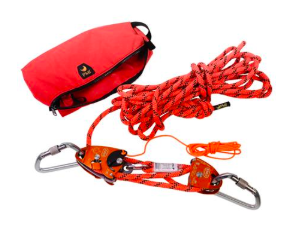
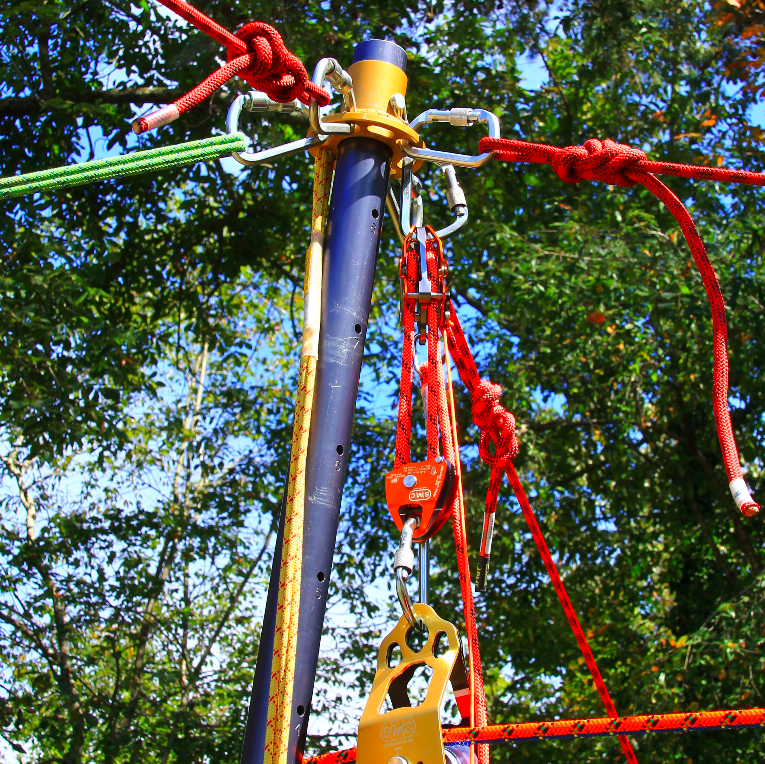
Well, there are other options for a “set of fours” and the SMC Advance Tech HX Haul System is one of them. Yes, we will be discussing others, but this one is a keeper.  We’ve used many times for heavy set rigging (hundreds of pounds of 10″ x 20′ logs) for building platforms, as well as for general use jigger/piggy-back and tie-back systems.

In short, The SMC Advance Tech HX Haul System provides an extremely strong and versatile haul system. Weighing around 3 pounds, this kit is pre-rigged as either a 4:1 or 5:1 mechanical advantage system.  We’ve been using this system for a number of years now and have enjoyed it.  And as many of you know, I am have never been excited about having to deal with prusiks with a jigger system.  I just think it is backward thinking.

This system is smooth and strong and with Rich Delaney’s “Fast Fours” setup, it is even better for confined space/tight space rescues.

I’ll spare you the details as honestly… they are all great (AZTEK, Advanced Tech, HaulBiner ect…).  The Advanced Tech HX is NFPA 1983, and what this really means ?… It is strong!  When used properly per manufacturers specs, it will literally save you time, energy and money.  You’ll love it.

Cam Rating 4:1 Haul System Strength – Typical 4:1 system rigged using the Advance Tech HX with cam engaged on the 4th leg and a standard double Pulleys.  The system utilized the becket on the Advance Tech HX Pulleys.  System was pulled end to end using carabiner holes.

Cam Rating 4:1
     Rope ø      Breaking Strength
7mm 2,000 lbf. (8.9kN)
9mm 2,500 lbf. (11.1kN)
12.5mm 4,500 lbf. (20kN)

Cam Rating 1:1 Haul System Strength – This configuration is not recommended due to the relatively low strength results, but are included in these instructions to provide the necessary guidance when developing rigging methods.  Single rope strand is rigged through the engaged cam and over one sheave.  The force is applied between the end of the rope and the Pulleys carabiner hole.

Cam Rating 1:1
     Rope ø      Breaking Strength
7mm 500 lbf. (2.2kN)
9mm 700 lbf. (3.1kN)
12.5mm 1,000 lbf. (4.4kN)

Peace on your days…

Lance

BUY the SMC Advance Tech HX Pulley System

The SMC Advance Tech HX Pulley is a double pulley with an integrated cam that provides immediate progress capture without the need of prusik loops. The all in one frame and cam design presents a compact form factor. Stainless pins retain the rope when a rigged system is packed so that system can be pulled out and used immediately. Manufactured from high quality aluminum and anodized to help prevent corrosion. The Advance Tech HX is the most advanced pulley of its kind on the market today. The Advance Tech HX will support ropes diameters from 7mm up to 12.5mm. The Advance Tech HX is ideal for all rescue applications where a small mechanical advantage system is being utilized.


Technical Rescue

Technical Rescue: The Importance of 15:1

This article has been re-posted by Animal Fire Rescue for educational purposes. 

The original posting can be found at: https://www.firehouse.com/rescue/rope/article/21095773/the-importance-of-151

Technical Rescue: The Importance of 15:1

Russell McCullar clarifies whether 15:1 is still relevant and says that fire departments should select gear and load limits that meet their needs.

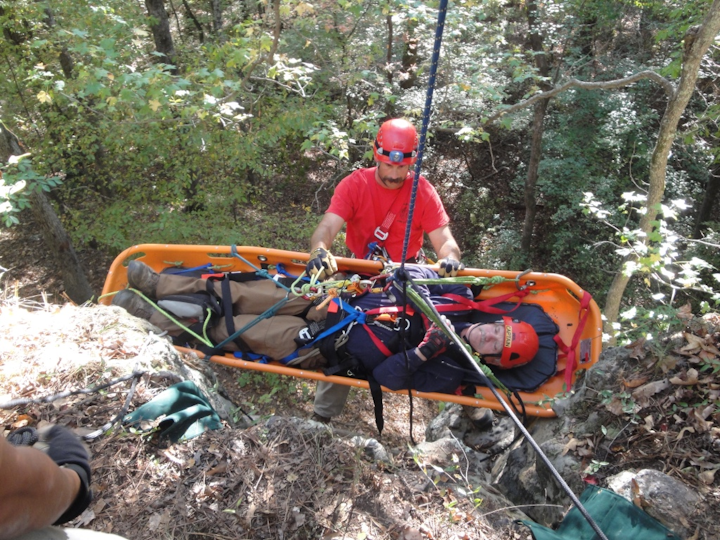
Firefighter participating in Advanced Wilderness Rope Rescue Course attends patient on a lower.

Not long ago, I was explaining to one of my students that our training agency was undergoing a transition from NFPA 1983 General Use to Technical Use rope and equipment. As I outlined the benefits, merits and headaches of this transition, the student looked at me quizzically and inquired, “So, you all are moving away from 15:1 safety factors?”

I was surprised by his question. It was 2017 and this student was in his early twenties. His father is a venerable rescue and hazmat instructor who owns his own business in training and consulting with industrial customers. It served as a reminder of how much knowledge in the American fire service is handed down in the spirit of oral tradition from our officers, our mentors, and yes, even our fathers. We are so accustomed to taking people at their word, he had no idea that words such as 15:1, one-person rope, two-person rope, safety factors, and many similar such sentiments, had not been published in NFPA 1983 since before he was born.

That’s right, folks. The last time these words appeared in NFPA 1983 was in the 1995 Edition. This means that many fire rescuers reading this article have been free from these oppressive shackles their whole lives. Most people, however, do not even know this is the case. Worse yet, there are still plenty of instructors and even a handful of modern texts that still proliferate this erroneous folklore from our past. I am a student of history, and like myself, I encourage students to ravenously press their instructors and the status quo, and ask, “Why?” But in order to appreciate the present, and prepare for the future, it is paramount that our rescue community understand and appreciate the past evolutions and advancement of our craft.

The current 2017 Edition of NFPA 1983 contains three main categories of life safety rope and equipment. These are Escape Use, Technical Use and General Use. General Use rope and carabiners (connectors) still have a minimum breaking strength (MBS) of 40 kN/9,000 lbf. Technical Use rope is still 20 kN/4,500 lbf and Technical Use carabiners are now 22 kN/4,950 lbf. I have elected to use approximations for simplicity. Readers can dig much deeper into the new versions of 1983 and examine subtle differences in requirements for pulleys, auxiliary equipment, descent control devices and belay devices. The first edition of NFPA 1983 from 1985 has grown from five pages of material to the now 90 pages of content.

The most important takeaway is the fact that there are no prescribed ratios or loads. You, my friends and colleagues, are the Authority Having Jurisdiction. 1983 just informs manufacturers how strong to create and design the equipment, how to test it and how to label it. Your team and your department get to do the homework and select the gear and load limits that meet your needs. In the eyes of this document, there are no imposed limits on the loads you use with Technical Use gear. The NFPA does not impose a safety factor on your equipment or team’s systems. A one-person load has no set value. Your team is responsible for setting this value.

History of NFPA 1983

Some readers may not be aware, but the modern age of technical rescue began on June 27, 1980 when FDNY firefighters Larry Fitzpatrick and Gerald Frisby fell to their deaths. Frisby became trapped at a 7th-story window of a working fire. Fitzpatrick was lowered from the roof on a 150-foot nylon “roof rope” to rescue Frisby. When the system was weighted by both men, the line cut and both fell to their deaths. While some parts of this incident are still debated, what is certain is that it would serve as an awakening and revolution in not only rescue ropes and equipment, but the rescue community as a whole.

Firefighter participating in Advanced Wilderness Rope Rescue Course is lowered using a sideways A-frame artificial high directional.Firefighter participating in Advanced Wilderness Rope Rescue Course is lowered using a sideways A-frame artificial high directional.Photos by Russell McCullarSubsequent to this incident, in 1981 the IAFF published a white paper entitled Line to Safety. It is within this widely distributed opinion paper that the groundwork for the first edition of NFPA 1983 would be laid. In the opening, it is stated that a 7:1 or 10:1 safety factor is adequate for a safe working load in industry, but is “inadequate for critical rescue use.” It is here that a two-person load is stated to be 600 lbs and a 15:1 safety factor should be applied to the rope, necessitating an MBS of at least 9,000 lbs. It should be noted, at the time, ropes had to be larger than ½-inch in order to meet this requirement. The paper mentions 5/8 inch–¾ inch in diameter rope examples. A final bit of trivia about Line to Safety is that in the references, it endorsed two then-unknown-to-rescue manufacturers—Pigeon Mountain Industries (PMI) and Bluewater. This thrust these two caving/climbing rope companies into the professional rescue scene in a big way.

The major tenets of Line to Safety would be echoed in the first version of NFPA 1983 that became available in June of 1985. This document would define one and two-person loads as 300 and 600 lbs, respectively. It also designated rope and equipment as one-person and two-person. Maximum working loads were expressed in pounds by dividing the MBS of a new rope by a factor of not less than 15. Finally, one last fan favorite in the first edition of 1983 was that life-safety rescue equipment was one-time-only use and had to be retired after use in an actual rescue.

At this point, you should be asking yourself “Why?” If you think about it, it really makes sense. At the time, there was very little in the way of research or empirical testing in rescue rope, equipment and methods. There were few subject matter experts who actually carried credibility in fire-rescue circles. Most were from the climbing and caving communities and their respective rescue circles. The techniques and equipment being used by fire departments for vertical rescue came directly from cavers and climbers. This included caving kernmantle rope, the Cole Rack and the Anderson figure-of-eight descender. As it were, the founders of two prolific rescue rope and equipment companies that remain today lobbied hard in the early days to lower the strength requirements and strict language.

In the eyes of the fire service, the IAFF and 1983 committee members of the time, the rope and equipment should be over-engineered to mitigate both the unknown and the foreseeable abuse and misuse of rescuers. Little was known about the effects shock loading, the degradation of nylon and polyester over time, and an infinite number of “what if … ?” in rope and rescue. Contrast that to present day, there is an endless library of testing and data if you know who to ask and where to look. This is largely thanks to the International Technical Rescue Symposium, formerly NATRS. The first symposium took place in 1985 and served as a venue for rescuers to present on anything from laboratory to “backyard testing” in rescue. This included slow-pull testing, drop testing, the infamous belay tests, and even what really happens to your rope when it is urinated upon. Much of this data can be accessed online and has been published in other academic and periodical venues.

The events of June 27, 1980 and subsequent papers and standards effectively “professionalized” rescue in North America. Over the next decade, at NATRS, in texts, articles, fire halls, and even bars, the best tools and techniques for rescue would be tested, argued over and scratched out on napkins, as an informal body of knowledge of best practices would be baptized under fire. Ultimately, this would result in inventors and manufacturers responding to rescuer needs and bringing equipment to market designed specifically for professional technical rescue. Kirk Mauthner and Traverse Rescue would bring the 540 Belay to market in the mid 1990s and by the turn of the millennium, Petzl would introduce the Industrial Descender (I’D). In present day, the market and demand for this gear is insatiable. Groundbreaking advances that once were years apart are now occurring every few months.

Postmodern era in technical rescue

The current trend is a great advancement of technology and equipment. Much more than the 1980s and 1990s, the rescue community is seen as a market to make profits. Everywhere you turn is another rope rescue instructor with an upstart training company. Twenty years ago, there were less than a dozen pieces of specialized rescue equipment specifically engineered for our needs. Today there are over a dozen devices from different manufacturers that are analogous to the Petzl I’D.

Incredible innovations are made by international companies just as often as they are by intrepid engineers in garages with 3D printers. One of the problems as a trainer that I do not relish tackling is really having to pick the best device or platform to teach rescuers across an entire state. What brands or devices do I bring into my personal rescue philosophy? In the 1990s a rack was like air and water—had to have it. In the 2000s it may have been the I’D. In the 2010s it could arguably be the CMC MPD. The field is more blurred as the years pass. I hate the idea of wholly aligning a curriculum with one product.

TTRS vs. STM/UTB

Another aspect that must be addressed is single tensioned mainline (STM) and un-tensioned belay (UTB) versus two tensioned rope systems (TTRS). Researchers like Mauthner and myself almost definitively proved the efficacy of TTRS versus UTB. In short, the benefits include the integrity of the rope and sheath from edge damage.

Additionally, fall distances and impact forces are greatly reduced. The problem with TTRS is that most descent control device configurations in a lowering setup rely too heavily on human reaction time. When lowering with a TTRS using I’Ds, MPDs, and similar, when one line is cut away, the operator of the surviving line often demonstrates a momentary delayed reaction. This results in an unacceptable fall distance or even ground impact.

Mauthner’s solution involves additional rescuers “tailing” the ropes. This requires throwing extra staffing at the problem. I see this more as an engineering problem. Manufacturers should give us a device that is sized like an I’D, works like an MPD, and has auto-stop properties of the Petzl ASAP.

Despite the obvious advantages, the jury is still out in other areas of TTRS. There are competing schools of thought on how they are managed in Artificial High Directional (AHDs). Both high have problems. One high, one low has its own problems. Some theses only work if the assumption can be made that the AHD is bomb-proof. Most believe the edge transition to be the most precarious time, but it is often difficult to maintain dual tension during many edge transition scenarios. As a community, we know we want to live in a world of TTRS, but there are pieces to the puzzle that have not been definitively addressed.

Firefighter participating in Advanced Wilderness Rope Rescue Course attends to patient. Photos by Russell McCullarFirefighter participating in Advanced Wilderness Rope Rescue Course attends to patient. Photos by Russell McCullarPhotos by Russell McCullar

Force-limiting systems and devices

One of the greatest paradigm shifts that directly relates back to safety factors is the concept of force limiting. This concept was proliferated largely by Mauthner, Lt. DJ Walker and myself during the International Technical Rescue Symposium in 2014. Basically, the market has brought rescuers all manner of devices that will slip at reasonably predictable values without damaging the rope. This means many systems can be rigged with a device that can be likened to a fuse, pressure relief valve or shock pack. Prusiks were erroneously portrayed as force limiting through the 1980s and 1990s, but were anything but predictable. The MPD, I’D, Gri Gri, D4 and similar devices are all capable of this force limiting behavior. So why does that matter? It means things will not break or explode as believed in the 15:1 days. Rather, they will slip when over-tensioned or strained. Thus, the death moans of the old Kootenay Highline and all the Prusik bypasses and load release hitches to boot! Now that is exciting. Highline recipe: 1. Far side—tensionless anchor or knotted termination. 2. Nearside—MPD or I’D Z-Rig. First trackline done. Need more support or elevation? Repeat steps one and two until satisfied.

Where we’ve been and where we’re going

The last 10 years of “sexy” rope training in niche schools has been highlighted by rigging and AHD work that takes hours before the first line is loaded. Photos of such courses flood social media. I love this stuff and enjoy it with the best of them. But rigging for art’s sake does not the best rescuer make. Recent and future years have, and should have, a renewed emphasis on personal on-rope skills. This means true rope ascending, changeovers, controlled descent and negotiating obstacles. Rope access techniques and technical rescue in the fire service will continue to merge. It should not require a $400 piece of kit to perform a standard pick-off. With typical climbing system, carabiners and a soft link, most rescuers should be able to facilitate most one-on-one rescues.

Additionally, the proliferation of automatic back-up devices will replace the need for a dedicated belay operator. This will save a unit of staffing. This enables faster patient access, faster rescues and better empowers rescuers to maneuver and self-rescue. In every discipline, a return to original roots happens periodically. It gives me great satisfaction to conclude that 15:1 is not really very important anymore. It is real and part of our rescue history—our early foundations and identity. As a rescue community, it is important to remember who we are and where we came from. Now is the time for our community to look forward and solve more difficult problems. The cliché arguments about absolute breaking strength and two-person loads is so 1995. The present-day is one of force-limiting systems rather than absolute catastrophic failure, advancing our personal on-rope rescue craft, selecting the right tools from many options and troubleshooting new paradigms like TTRS.

Technical Rescue

SMC To Produce Omega Carabiner Line

The following article is re-posted by Animal Fire Rescue

SMC To Produce Omega Carabiner Line

SMC, a specialty rescue and climbing hardgoods company, will carry forward a range of Omega Pacific’s top selling ISO forged carabiners.

Omega Transition

FERNDALE, WA – Seattle Manufacturing Corporation (SMC) announced today that it has purchased the tooling and machinery to produce Omega Pacific’s top selling carabiners – specifically the ISO forged D’s, Ovals, and select HMS models.

On January 20th of this year, Omega Pacific, one of the U.S.’s largest manufacturers of carabiners announced that it would be winding down operations after 37 years in business stating the pronouncement was based on economic factors and the owner’s decision to retire.

Along with the tooling and machinery, Omega Pacific is collaborating with SMC to transfer all the required intellectual capital, supply chain, and customer contact information. “I can’t overstate how cooperative the entire Omega Pacific team has been” says John Evans, SMC’s Sales and Marketing Director. “It’s obvious they are truly looking out for the needs of their customers and trying to make the transition as seamless as possible.”

Rob Nadeau, Omega Pacific’s CEO commented “SMC was the obvious choice to continue Omega Pacific’s legacy of reliable, quality carabiners. Our closing was going to leave a huge void in the recreational climbing, industrial, OEM, rescue and military markets. This agreement ensures those key products that have become vital components in so many applications, will be available for decades to come.”

Evans notes that “for many of Omega Pacific’s existing customers, SMC’s product line, which includes pulleys, edge protection, and steel carabiners, will be a great compliment to their product assortment.”

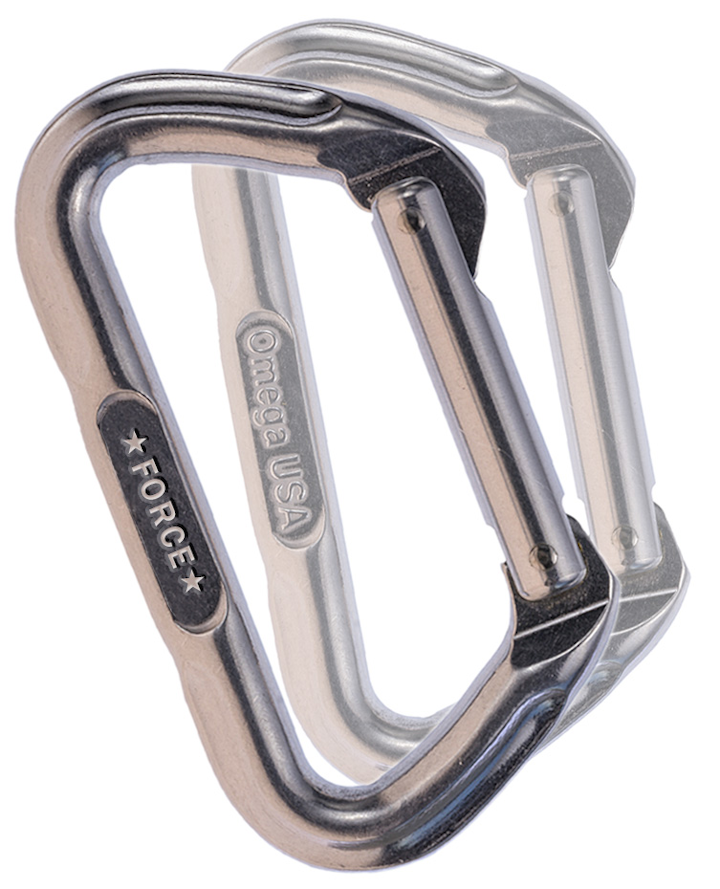
While the transfer is still in its early stages, SMC hopes to begin deliveries in early June. The Omega name will be removed from the carabiners and the line will become SMC’s new “Force” series. All technical specifications as well as the NSN numbers will remain the same. Models will include both the locking and non-locking styles and will be offered in the same popular color options.

About SMC

SMC is one of America’s most trusted technical rescue brands. Founded in 1967 as Seattle Manufacturing Corporation, during the golden age of high-altitude mountaineering, SMC products have accompanied many of the Northwest’s finest climbers on historic ascents of peaks like K2 and Everest. Today SMC continues to produce Kobah ice axes and other mountaineering equipment, as well as being a leading supplier of technical rescue equipment for fire rescue and industrial safety. SMC is an ISO 9001 certified manufacturer, an independent, third party certification process that guarantees reliability and efficiency in manufacturing. All SMC products are made in the USA at their Ferndale Washington facility.

Technical Rescue

Defying Gravity: Lifting and Moving Objects in the Rescue Environment

The following article as been re-posted by Animal Fire Rescue with commentary regarding items that are relative to Animal Rescue Training.

Rescue-training expert Michael Daley provides hands-on-useful instruction for structural-collapse rescuers.

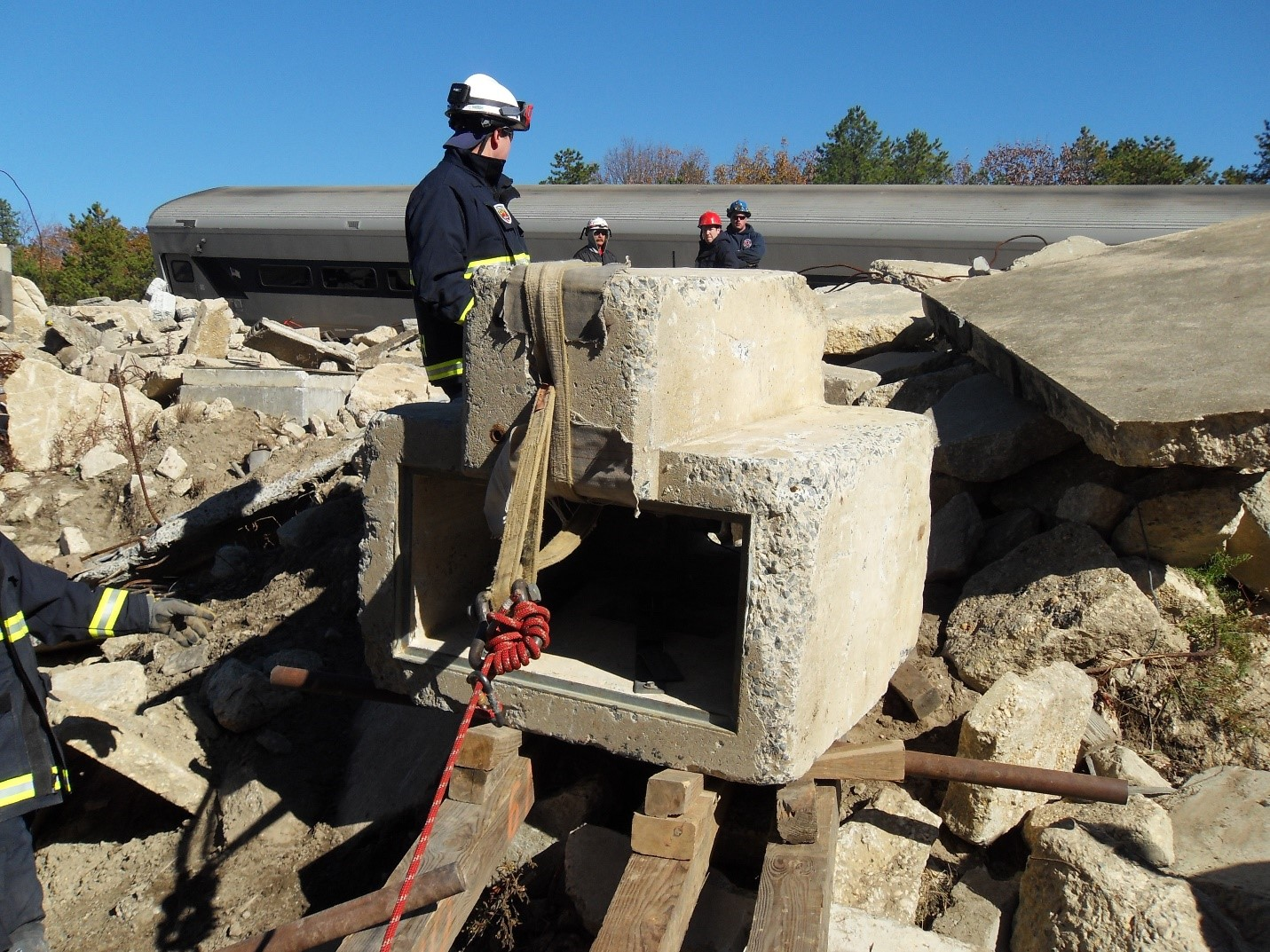
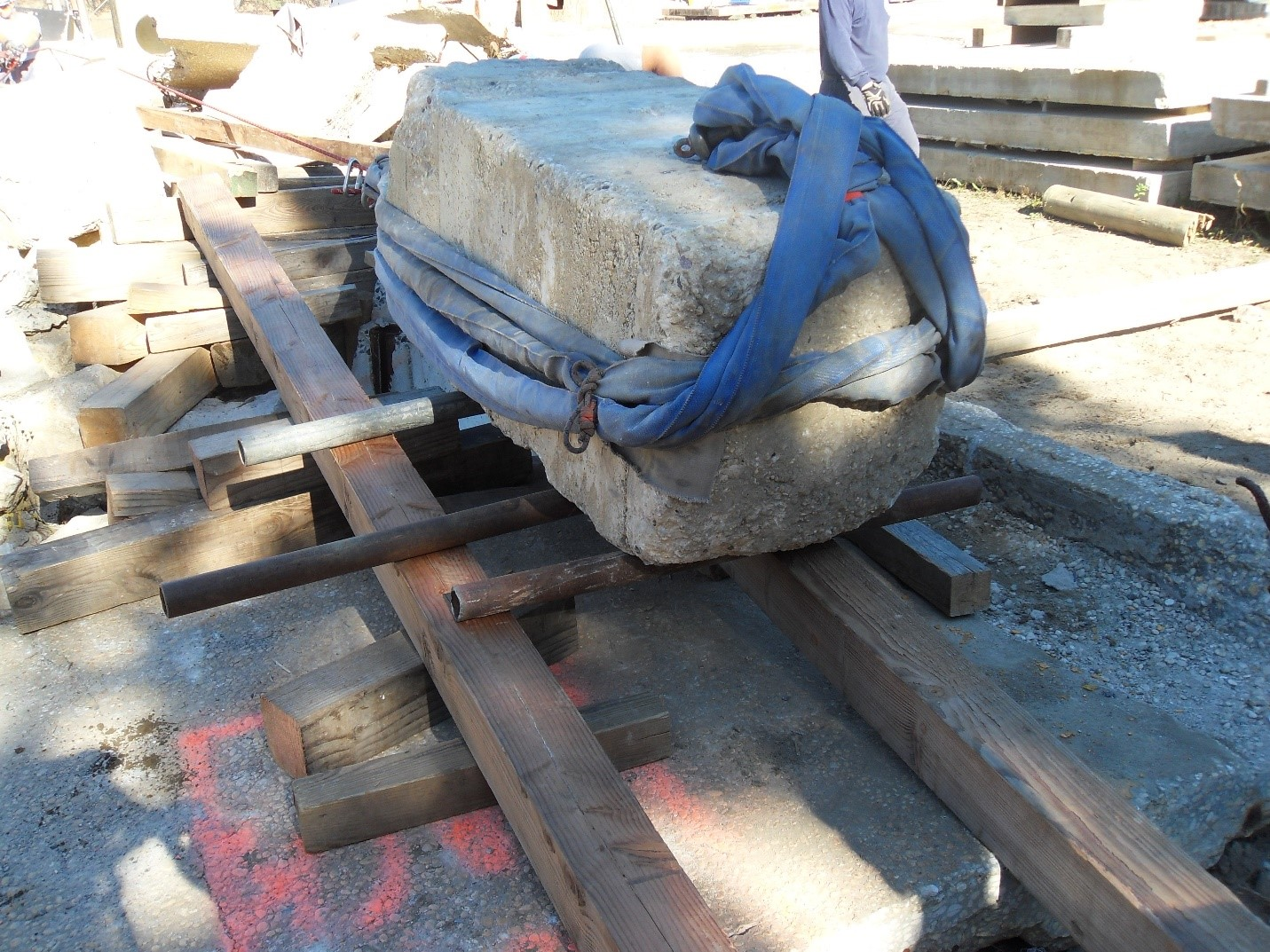
The ability of a rescue company to move an object involves physics, control, mechanical advantage and problem-solving. For example, utilizing rollers under heavy objects limits the friction between surfaces, assists in moving the object and helps in the control of the direction of movement. Use of an incline plane, or ramp, for the object to travel down allows for more controlled movement of the object.
Photos by Mike Daley

Many of the nation’s fire departments and rescue squads provide technical rescue services to their respective communities. Working in the world of rescue, a member understands that rescue is the science of alternative solutions; in layman’s terms, the answer to the issue that is entrapping the victim will require some creative methods that are beyond the everyday operations. Many times, the solution can be measured in inches or smaller for overall success. Furthermore, this solution requires displacing the object that’s providing the entrapment. Being able to move an object involves a significant level of physics, control, mechanical advantage (MA) and a theory of problem-solving.

Identifying the details

Starting with the initial needs for movement of an object in any direction, my urban search and rescue (USAR) trainers instilled some basic rules from my “USAR Specialist Manual” when it comes to working against the forces of gravity, and these stand as true today as they did two decades ago:

  • If you can leave it, leave it …
  • If you can’t leave it, go around it…
  • If you can’t go around it, drag it…
  • If you can’t drag it, roll it… In Large Animal Rescue we Role before we Drag.
  • If you can’t roll it, lift it…
  • If you must lift it, stay far away from it…
  • (Most importantly) If it falls, don’t be under it.

These rules are set in a logical decision-making progression when it comes to making an object airborne; for the most part, the first rule applies whenever possible. However, when you can’t leave it, there are other aspects that must be considered:

  • Can it be done safely?
  • Do you know how much it weighs?
  • What are the coefficients against movement (gravity, friction, etc.)?
  • What type of equipment will be required to move it?
  • Can existing personnel pull it off (equipment/available force vs. training)?The center of gravity of an object must be determined to aid in moving the object safely and efficiently, whether vertically or horizontally. Shape, size and material density play a part in that determination.The center of gravity of an object must be determined to aid in moving the object safely and efficiently, whether vertically or horizontally. Shape, size and material density play a part in that determination.

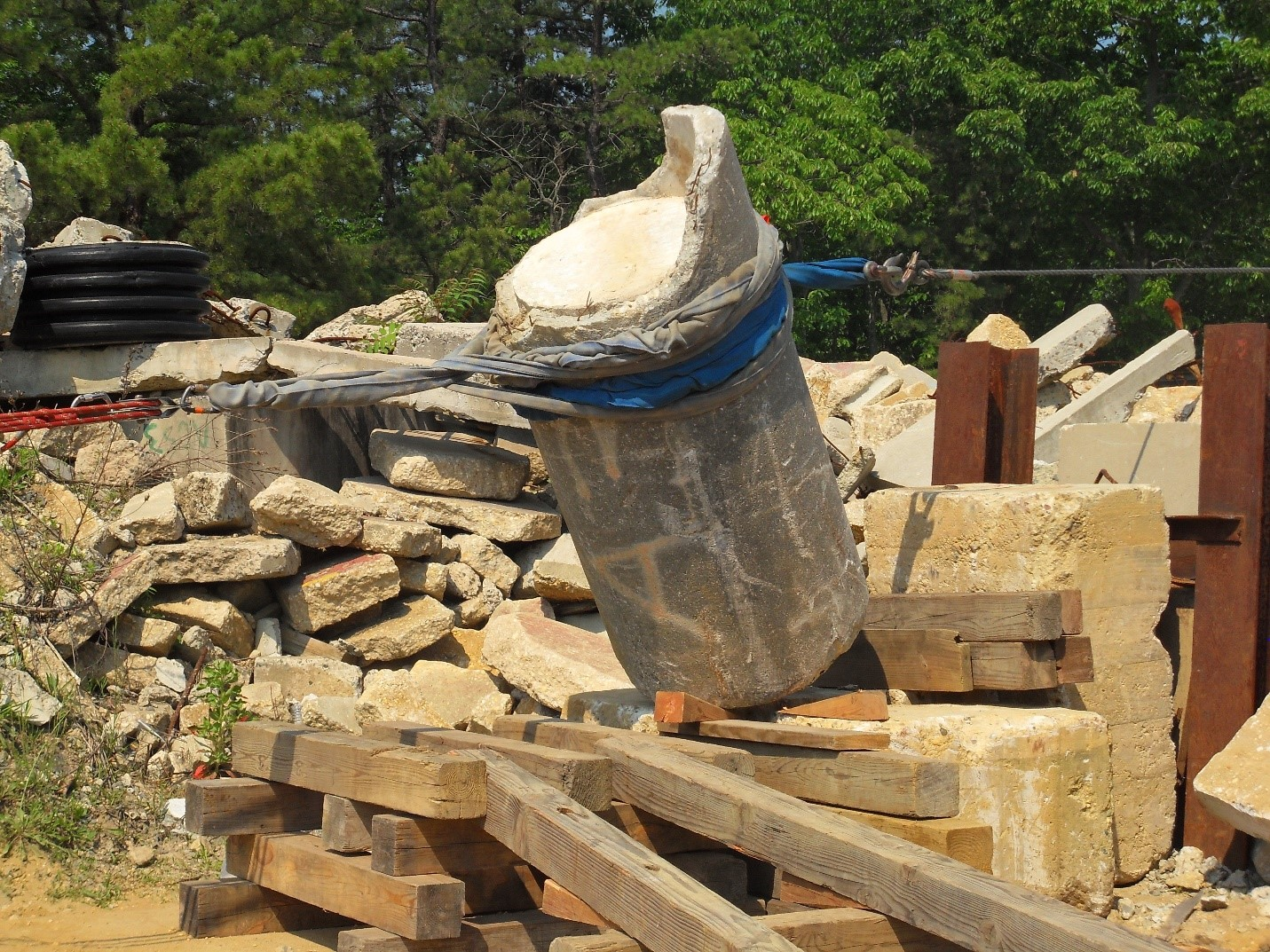
A critical step in moving an object is determining the center of gravity of the object. To begin, the shape, size and density of the material out of which the object is made play a part in determining the center of gravity. This is the point where the horizontal, vertical and diagonal axis of the object intersect. If the object is uniform in size, it’s quite easy to determine this point; but on the rescue scene, many objects that need to be moved aren’t geometrically even. Some loads won’t be uniform, and some might have shifting loads (such as tanks that contain liquids) that constantly will affect this point. Many times during the operation, adjustments need to be made to the rigging points before moving the load.

The object’s weight is referred to as the measure (usually in pounds) of the force of gravity on the object. Basic physics teaches us that the larger the mass (weight) the greater the attractive force (gravity) that it will exert on other objects. Based on the density of the material that’s used in its construction, equal-size objects can vary greatly in weight. For example, let’s say that a team needs to lift off of a victim a concrete block that measures four feet long, two feet high and two feet wide. To determine the weight of this block, a variable accepted for reinforced concrete is 150 lbs./cu. ft. So, to calculate the weight of the block, multiply the dimensions together and then multiply by the variable (2 x 2 x 4 = 16, 16 x 150 = 2,400 lbs.). So, the method that’s utilized to lift this object must overcome 2,400 lbs.The weight of the object needs to be calculated to determine efficient movement operations and equipment capabilities.The weight of the object needs to be calculated to determine efficient movement operations and equipment capabilities.

Calculating the weight of the object to be moved helps to determine the next steps in removing the object.

Lifting the object

Gravity must be overcome to lift an object, but gravity can assist the rescue team in the movement process. Gravity can be controlled by rescuers by constructing supporting rigging that can pace the speed by which the object is lowered. For example, brake bar racks can be utilized as friction devices to help to pace the downward motion of the object. Gravity also can serve as a movement force in certain applications. (Consider an elevator car that operates with a counterweight in the opposite direction of the car’s movement. The counterweight assists the elevator motor in moving the load.)Many times, efficient skills in lifting and moving involve lowering an object. Here, a lowering system is deployed once the object passes beyond its neutral point to be controlled safely.Many times, efficient skills in lifting and moving involve lowering an object. Here, a lowering system is deployed once the object passes beyond its neutral point to be controlled safely.

So, then, how do we determine how to lift/move/push/pull the aforementioned object? We need to overcome 2,400 lbs. to achieve this. So, what are our options? Well, as a rule, most rescuers safely can move 50 lbs. (controlled) in any direction. (One can debate this number, but this takes into consideration wet and uneven topography, long-duration operations, debris-laden floors and other hazards that are associated with the rescue scene.) If we were to lift this object with just brute force, we would need a ridiculous amount of personnel to do this. So, we must rely on simple machines and MA, which works as a force multiplier on the load that’s being moved.

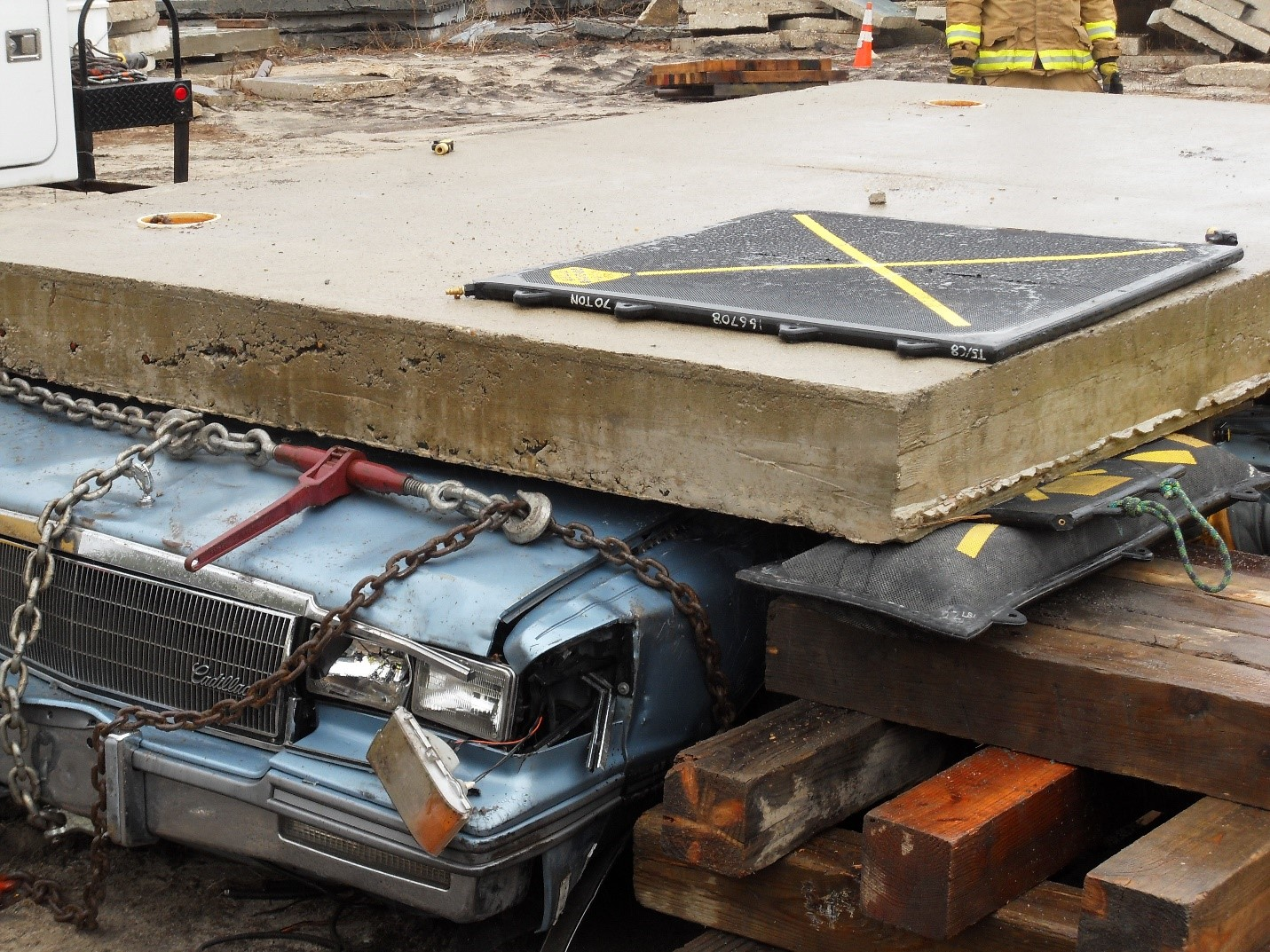
Let’s use a simple Class I lever as our machine. The lever consists of four parts: the lever itself, the fulcrum point, the applied force and the load point of contact. The MA is determined by the fulcrum point location; if the fulcrum is placed at the halfway point, there is no MA: force in would equal force out. Therefore, for our scenario, we will utilize a 14-foot-long 6 x 6 timber as our lever, and the fulcrum point will be two feet from the load. The resulting MA of the lever would be 14/2 = 7:1. Dividing the load to be moved by the MA, the needed force applied to move the object would be 2,400/7 = approximately 350 lbs. Approximately seven rescuers would be needed to apply force to the lever in this setting to get the object to move in the direction that’s desired.Use of pneumatic bags can assist in moving heavy objects on the rescue scene.Use of pneumatic bags can assist in moving heavy objects on the rescue scene.

Whether a rescue team utilizes pneumatic air bags, rope MA systems, levers or hydraulic jacking equipment, it’s imperative that the weight of the load that’s being lifted be calculated. That way, the operation can be done safely, and the equipment that’s utilized can handle the stresses that are placed upon them to move the object.

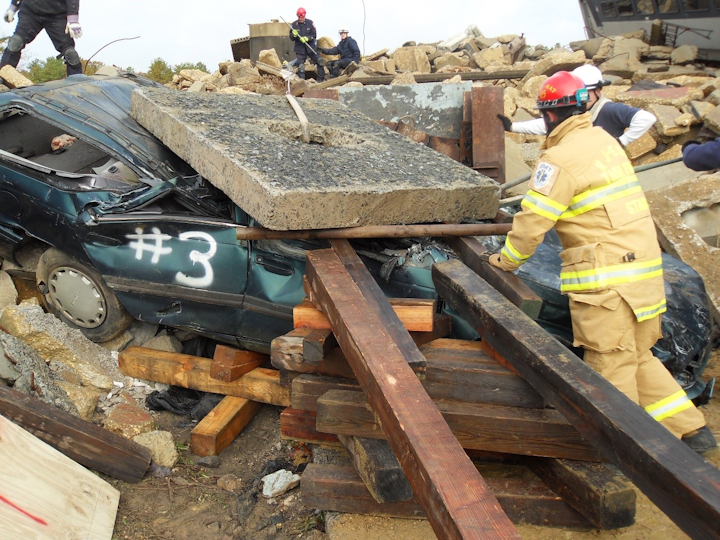
Additionally, as a rule in rescue, when we lift an inch, we crib/capture the inch; cribbing materials and stabilization equipment must be deployed as the lift is taking place to avoid catastrophic results should the lifting system that’s being used experience a failure.Every system has a point of diminishing return that renders a system ineffective. Timber can be used for cribbing or lifting, but it must have sufficient strength to do the job, or it will fail, as the piece of timber at top center has. A minimum of eight rings per inch is suggested for strength in timber, and no rot or decay should be present.Every system has a point of diminishing return that renders a system ineffective. Timber can be used for cribbing or lifting, but it must have sufficient strength to do the job, or it will fail, as the piece of timber at top center has. A minimum of eight rings per inch is suggested for strength in timber, and no rot or decay should be present.

Moving the object horizontally

In some settings, it might be necessary to displace an object horizontally to gain access to a victim. Although it still is imperative to calculate the object’s weight, another obstacle that must be overcome is the friction that the object has against the surface it’s resting upon. The friction is the tangential force between the two surfaces that resists the motion of an object. The amount of friction is related directly to the amount of weight that the object is exerting.

It’s up to the rescuer to understand the best method of defeating friction. One example is having a liquid between the two surfaces. Consider the treads on a tire on a vehicle. The treads allow the water to be displaced, so the surface of the tire can maintain contact with the roadway. Many people have experienced icy road conditions that can reduce or even nullify the friction that’s between the tires and the asphalt.

Another method that’s more common on the rescue scene is placing rollers (pipes) between the object and the mating surface. This provides two advantages: the surface area that’s between the two surfaces is reduced, which lessens the friction; and the rollers are placed roughly 24 inches apart, so the rollers will turn and allow the object to move much more easily.

One example of a simple machine that can move an object both vertically and horizontally is an inclined plane. Although it’s the least complicated of all machines, it is one of the least efficient because of the large amount of surface-area contact between the plane and the object.

The efficiency of the plane is determined by the length of the plane relative to the height of the lift at the top of the plane. For example, a rescue team must move a 1,000-lb. block up an inclined plane. If the ramp of the plane is 20 feet long, and the height of the ramp is 5 feet high, this machine would result in an MA of 4:1 (20/5 = 4). Dividing the load by four (assuming little to no friction between the surfaces), the force that’s required to move the object up the plane would be 250 lbs.Compound and complex mechanical advantage (MA) systems can be made from rope and associated equipment to multiply forces that are put onto objects.Compound and complex mechanical advantage (MA) systems can be made from rope and associated equipment to multiply forces that are put onto objects.

Once the object is in motion, it’s critical that a control system be put into place to allow the methodical lifting and lowering of the object. Lifting an object will require a controlled lowering system as well. This may be achieved by utilizing a separate system that’s designed to lower the object, or an MA system can be converted from a lifting system to a controlled lowering system.

When moving an object horizontally, it’s important to control the speed of motion, so the object doesn’t increase speed beyond the forces that are applied. In this case, a tensioned system should be utilized to manage the overall speed of motion.

Maximizing efficiency

When it comes to efficiency, the action plan must be realistic. Every system has a point of diminishing return that renders the system ineffective. For example, a rescue team that’s lifting a 2,000-lb. concrete block with a Class I lever wouldn’t use a 16-foot 2 x 4 as the lever, because the material would be too weak and would fail quickly. Conversely, we wouldn’t request a 75-ton lattice boom crane to lift the 2,000-lb. block, because the crane would be too heavy and complex for the assignment. Additionally, we wouldn’t expect to amass 40 rescuers to join hands and lift the block, because there would be way too much “fuel” for the machine to be utilized.

Therefore, it’s important to consider the objective for realistic results, utilizing the system with the maximum amount of efficiency for the task at hand.

The final movement

The maneuvers that are discussed here don’t represent an all-encompassing description of options. They only scratch the surface of potential lifting and moving skills for the rescue scene.This griphoist is an example of a device that can be utilized to provide a controlled lift as well as the lowering of an object.This griphoist is an example of a device that can be utilized to provide a controlled lift as well as the lowering of an object.

It’s highly recommended that emergency responders continually update their skills in the area of lifting and moving techniques. Identification of all hazards and application of current rescue skills are used in coordination with patient care for the most successful outcome on scene. A competent rescuer is skilled in weight calculations, multiple types of MA systems and equipment and the most efficient method to deploy these systems

https://www.firehouse.com/rescue/technical-rescue/article/21121844/defying-gravity-lifting-and-moving-objects-in-the-rescue-environment