
The following videos show a couple of different configurations of Skate Blocks, Cross Haul, Track Lines and Trolley Lines.
Articles & Video
Safety 3rd
Safety is important but it is not priority one.
The idea that safety is not the primary concern is part of the the volunteer rescue culture. We want to mitigate risk when ever possible and measure the amount of risk against the reward for taking that risk. If you want to make safety your first priority you would simply stay home in a padded room, drink liquid food from a straw and not drive to the rescue scene.
Performing rescues requires you to accept a level of risk. The Safety Officer on a rescue scene or a training has the job of identifying risk, mitigating risk and informing personnel of risks they may not be aware of. It is not job of the Safety Officer to remove all risk.
The ultimate responsibility of how much risk personnel assume is up to them. This statement assumes that the personnel are operating within safety standards.
Mike Rowe from Dirty Jobs coined the term, Safety Third. I believe he has the best explanation possible to explain why safety should not be your first priority.
Walk me through this “Safety Third” thing. (Full write up by Mike Rowe)
Dog Rescue in 60 foot hole
Several agencies helped rescue the dog in this video. Ken Gilden the founder of Animal Fire Rescue is seen helping with the dog along with Chula Vista Fire, San Miguel Fire, Bonita Fire, SDHS ERT and Chula Vista Animal Control.
See Fire House Magazine article for more information.
Lessons Learned
Due to the depth of the hole and in ability to safely lower personnel into the hole made this rescue very difficult. Fortunately rescue personnel were able to get a loop around the dogs neck after hours of trying and pull him out.
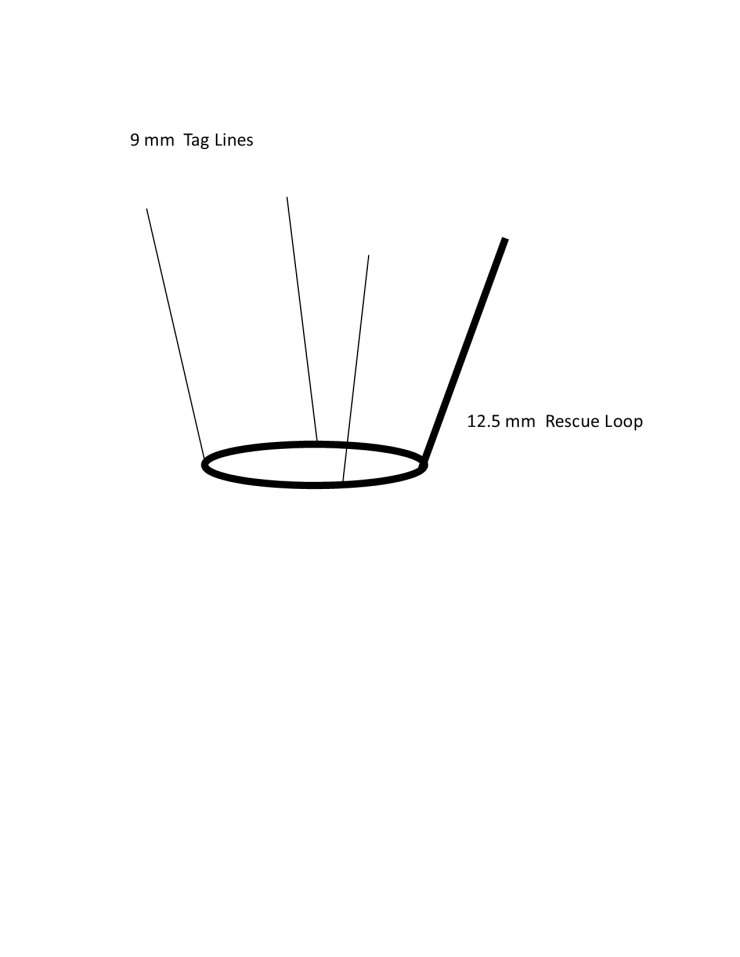
Animal Fire Rescue has developed a rope technique that would allow better control of a rescue loop at depths up to 100′. This Technique will hopefully allow rescue personnel to place a Rescue Loop faster and possible even get it around the body of an animal. (see diagram below)
The Tag Lines will allow the Rescue Loop to be controlled and put into place. The Tag Lines will also prevent the Rescue Loop form being synced completely, so as not to constrict the animal. If weight is needed on the Rescue Loop, carabiners could be attached at the Tag Line attachment points.
On Rope Pick Off Class
This Blended class is a Technician Level Training and requires both the Distant Learning and Hands On portion to complete.
Distant Learning Class
Pre-Evacuation Class
Animal fire rescue offers a free distant learning pre-evacuation class. If your organization would like additional training AFR can provide a custom class to fit your needs.
Free Pre-Evacuation Class

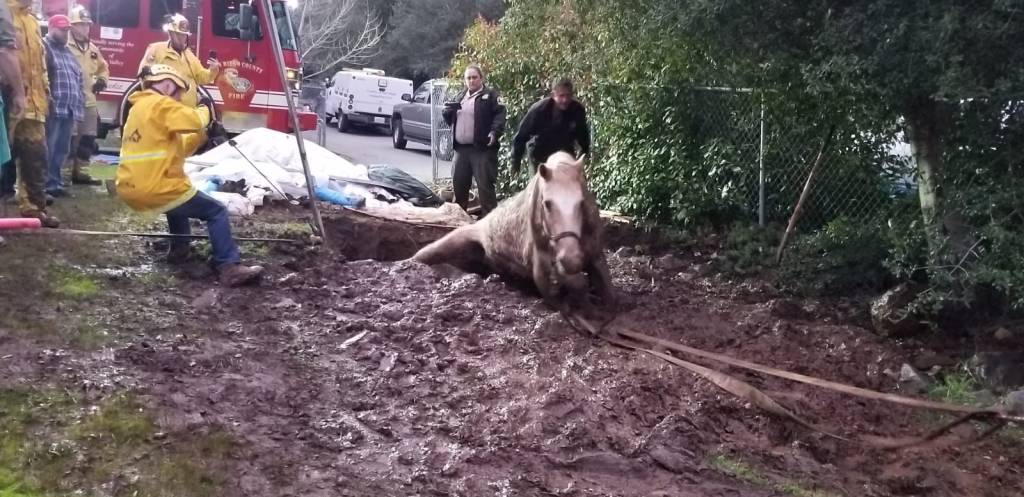
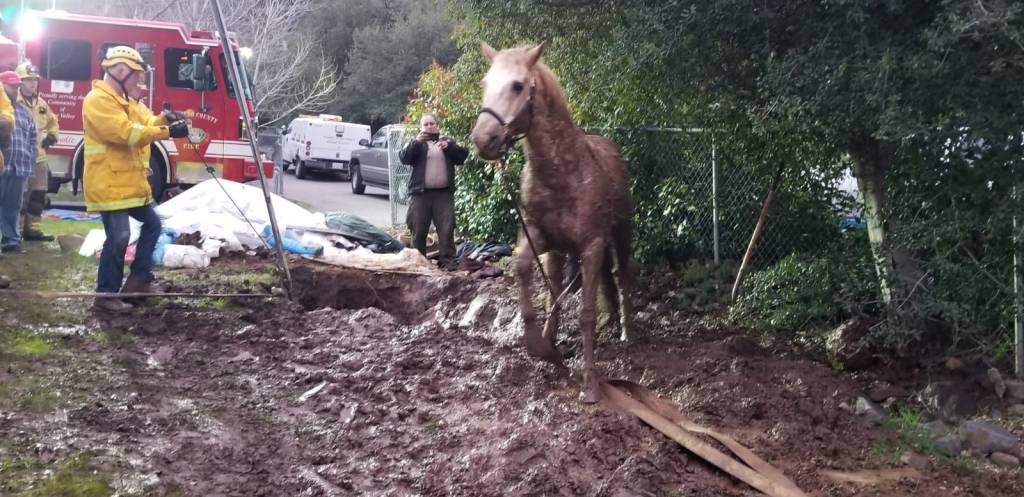
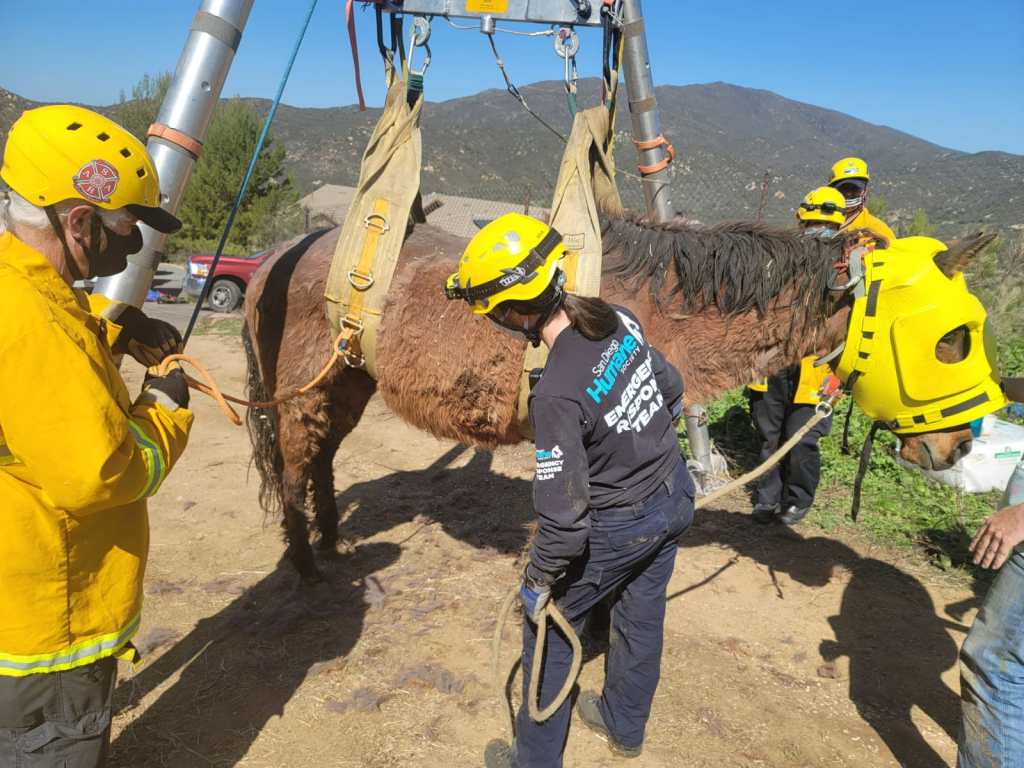
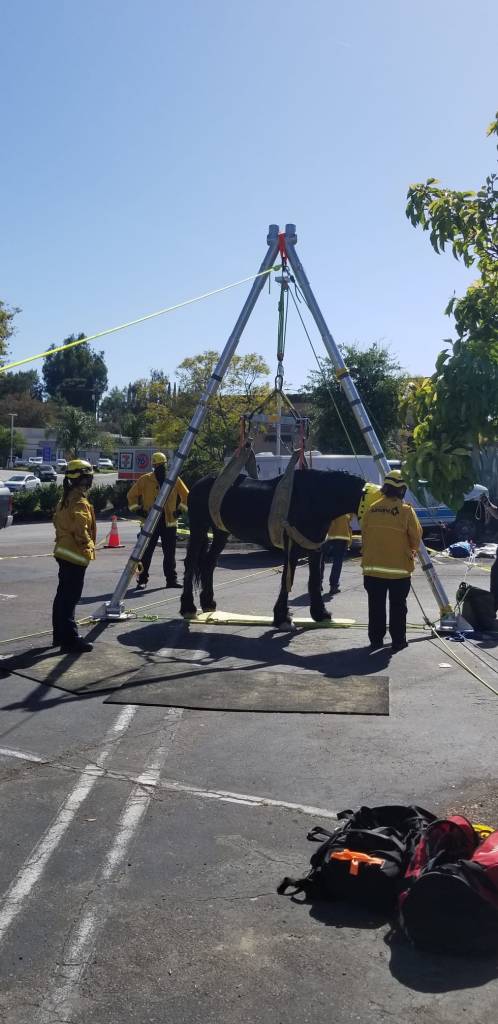
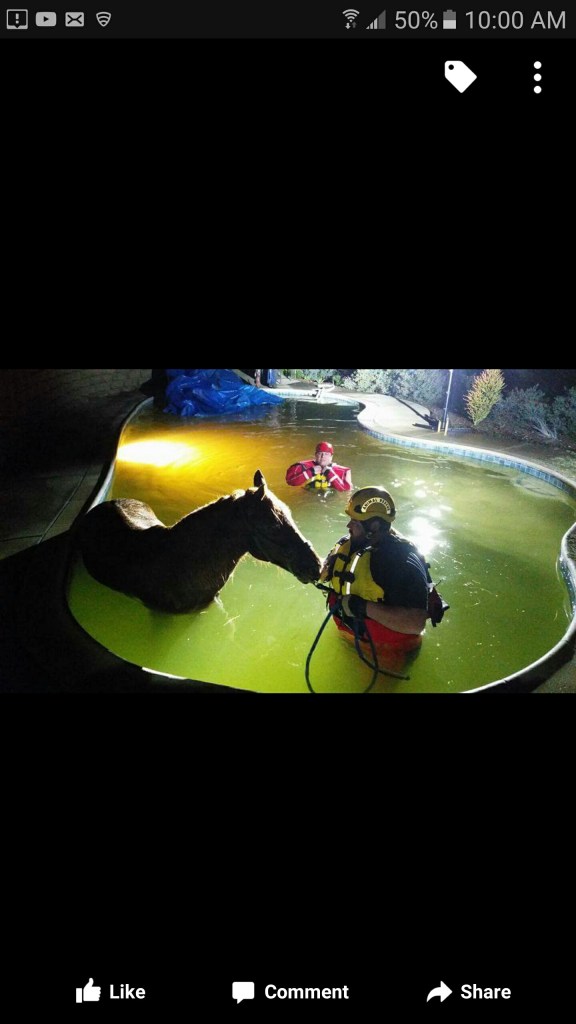
Rescue Pictures




SDHS ERT Radio Class
This class was written by Summer Piper for the Emergency Response Team. Summer is a retired San Diego Sherriff Dispatcher.
The self guided class covers general radio information as well as the SOP for the Emergency Response Team.
https://drive.google.com/file/d/1yJRd9t9rt0J9r6XMqE18ipmDzalmBWnN/view
Artificial High Directional (AHD) Distant Learning
There are two classes listed below. The first is a Haist Bipod Task Level training and the second is an Operational Level training for several AHD devices.
Haist Bipod Task Level Training
The Learning Objective for this class will include:
- At the end of this course the student will be able to identify the general construction concepts for the Haist Bipod.
- The Student will be able to identify specific setup steps for the Hast Bi-Pod.
- The student will demonstrate Level 1 knowledge by completing an online quiz with 80% accuracy.
Haist Bipod Task Level Distant Learning Class
Operational Level training for several AHD devices
The Learning Objective for this class will include:
- At the end of this course the student will be able to identify the general construction concepts for an AHD.
- The Student will be able to identify specific setup steps for the following AHD systems: Hast Bi-Pod, SKEDCO Tri-Pod, Ladder Gin.
- •The student will demonstrate Level 1 knowledge by completing an online quiz with 80% accuracy.
AHD Distant Learning Class
Informational Videos
MPD Instruction
The following CMC videos provide a good understanding of the setup and use of the MPD.
CMC Rescue MPD Introduction; 1 of 3
CMC Rescue MPD Operation; 2 of 3
CMC Rescue MPD Practice Tips; 3 of 3
Topics not covered by the above videos
MPD as a Slack Belay
1st Method (Hand Tight Tension)
This Method comes from CMC. (see MPD User Manual Information and Video below)
To ensure proper hand-tight tension of the Belay Line (such as during edge transitions), firmly grip the load end of the rope with one hand and apply friction, so that there is no slack in the rope between the load and your hand. The other hand feeds the running end into the MPD so that the rope is unseated from the sheave tread. This will reduce rope drag on the sheave and keep the MPD from inadvertently locking up. This technique allows the operator to match the speed of the Main Line. In contrast, the technique of trying to simultaneously shuffle rope into and out of the MPD will result in a repetitious start-stop motion of the belay rope and will likely result in frequent unwanted lockups.
2nd Belay Method (AFR Alternate Method)
Animal Fire Rescue has developed an alternate Slack Belay method based on the the following conditions:
- A Slack Belay is needed.
- A TTRS is not appropriate due to the need to keep the Belay at ground level.
- The CMC Hand Tight Tension method is causing jamming or unwanted lock up of the MPD.
The AFR Alternate Belay Method maintains the T-Handle open with a T-Cup Grip, while keeping the other hand on the tail of the rope in position behind the MPD. A small S-Shaped loop of slack is maintained keeping tension off the friction plate of the MPD. This method uses the same concept as a Tandem Prusik Belay in that a small loop is kept in the Belay Line.
If a Main Line failure occurs the Belay line will be held by the friction plate of the MPD since the operators hand is always behind the MPD. In addition the operator will be able to easily release the T-Handle due to the T-Cup Grip.
AFR recommends this method be practiced and only used by trained personnel.
MPD on a Bi-Pod Support Line
The MPD on a Bi-Pod Support line is very effective but it can also be difficult. When performing a swing of the Bi-Pod with a horse or other large animal the T-Handle can be difficult to open. The following items will help mitigate those difficulties.
- Set your MA out as far as possible. This will allow you to use the MA to assist with Lowering and Raising on a swing of the Bi-Pod with out the need for resets.
- When Lowering keep the MA in place and use the extra friction bar on the MPD.
- If there is a considerable amount of force on the system pull on the Haul Line to release the presser on the MPD.
- Keep tension on the Haul Line while it is brought back to the extra friction bar.
- Pull the handle and lower.
- You may need to position yourself facing the anchor to get better control of the MPD.
TTRS over DMDB techniques
Two Tensioned Rope System over Dedicated Main Dedicated Belay
This is a topic that has received a considerable amount of attention. The idea is that two main lines are used in place of a Main and Belay line. In order for the system to be Dual Capability both lines need to be G rated for rescue.
This post will look at a couple of key points from a Large Animal Rescue perspective.
The advantages of DC TTRS:
- No Shock Load: With a Large Animal Rescue the Shock Load can become catastrophic quickly if a Main Line failure occurs with a traditional Belay.
- Safety Ratio: The Safety Ratio is not as critical since there is no drop in the system from a line failure. It is impossible to even get a 10:1 safety ratio with a Large Animal Rescue, so this system provides a solution to that problem.
- AHD: The Standard is to run both lines through the Artificial High Directional. This eliminates falls at the edge from a line failure. The use of an adjustable second line is also very popular and allows the second line to be adjusted as needed for safety. This adjustable line is beneficial to a Large Animal Rescue since there is often a need to drag the Animal under the AHD after the initial rescue for a direct lift. Being able to adjust a second line to ground level makes a flat drag under the ADH possible.
- Number of Personnel on a Haul Line: Large Animal Rescue can require additional personnel on a Haul Line. TTRS allows more personnel to be used in a shorter distance since they are divided between the two lines.
By Ken Gilden
The following video provides information on human rescue using TTRS but the information is transferable to Large Animal Rescue:
The following article provides a detailed discussion on this topic.
 Animal Fire Rescue